
🔄 Last updated: April 11, 2026
These are the 10 free methods I used to get more customers in your grocery store — going from zero online visibility to 25+ new walk-in customers per month, without spending a single rupee on advertising.
10 Free Methods That Actually Worked
⚡ Quick Win — Start Here
If you only do ONE thing from this guide, set up your Google Business Profile.
It’s free, takes 20 minutes, and brought me 10+ new walk-in customers in 30 days.
The fastest way to get more customers in a grocery store is to optimise your Google Business Profile, collect reviews consistently, and post weekly updates. Most stores start seeing new walk-in customers within 1–2 weeks by appearing in “grocery store near me” searches — at zero cost. Local searches for grocery stores near me have grown significantly, and studies show most local searchers visit a business within 24 hours of their search.
❌ The mistake most grocery stores make: They think discounts are what get more customers. Discounts convert customers who are already there. Visibility is what gets them through the door in the first place. That’s what this article is about — visibility first, conversion second.
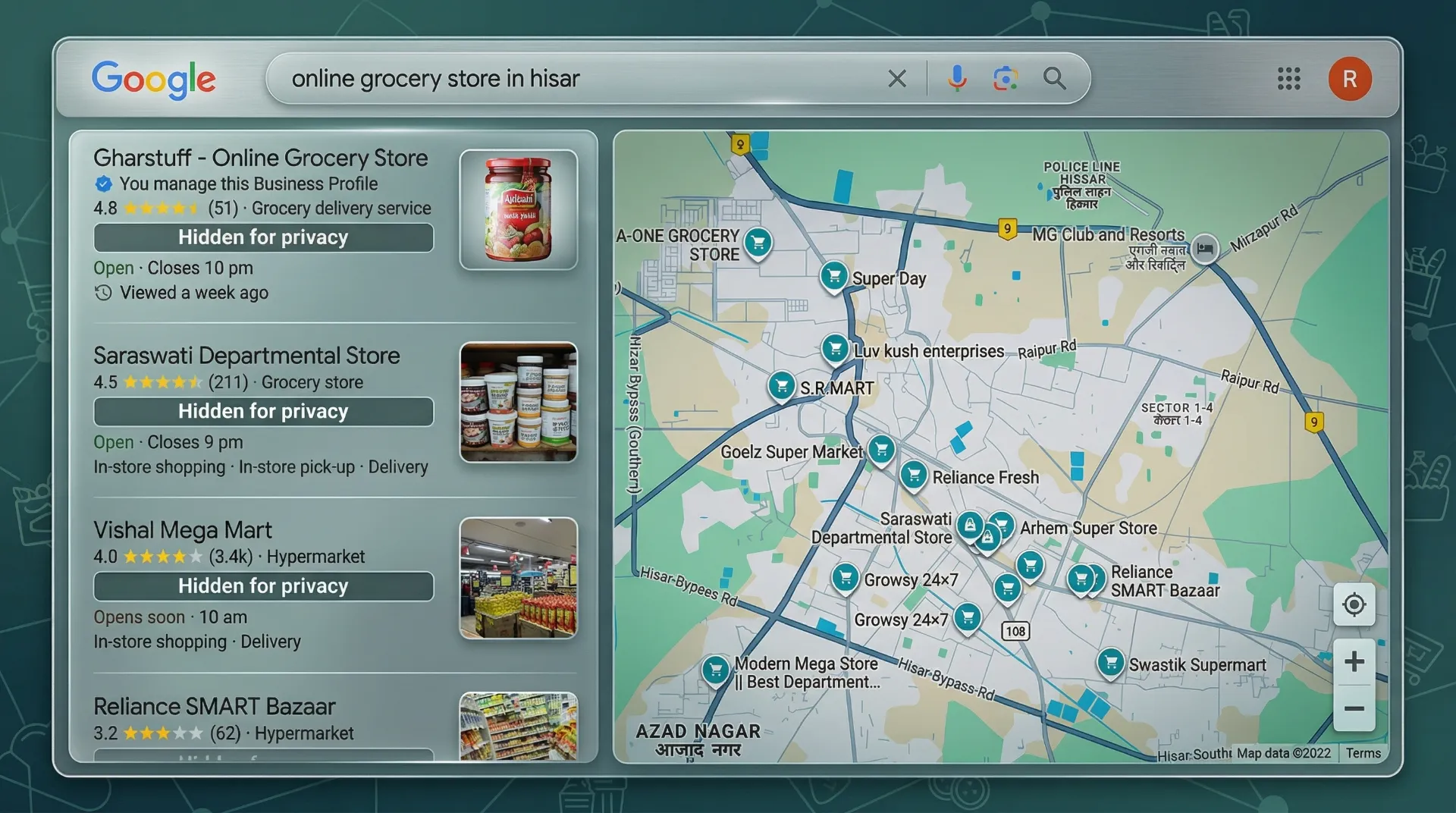
A man walked into my store one Tuesday afternoon and said something I had never heard in five years of running this shop: “I found you on Google Maps.”
I almost asked him to repeat it. My store had been on that street for five years. The regulars knew us. The neighbourhood knew us. But anyone who searched “grocery store near me” on their phone? We were invisible. Completely invisible.
That Tuesday customer came because I had spent 20 minutes the previous week setting up Google Business Profile properly. That’s it. 20 minutes. He spent ₹520 ($6.20) on his first visit. He’s been back eleven times since.
That was the beginning. Over the next 90 days, I tested every free method to get more customers for my grocery store — not from a marketing textbook, but by actually trying things with real customers. Some worked immediately. Some took weeks. Some were a complete waste of time.
Here are the 10 methods that actually worked — with real numbers from each, so you know what to expect before you spend your weekend implementing it.
by month 3
from 0 in 30 days
instead of wasted
across all 10 methods
I’m in Hisar, India. You might be in Ohio, Manchester, or Melbourne. Every method below works globally — the tools are the same everywhere. I’ve noted US/UK/AU adaptations where the implementation differs.
📋 Quick Navigation: Free Digital Methods · In-Store Conversion Methods · Community Methods · GBP vs Paid Ads · What Didn’t Work · 30-Day Action Plan
Tier 1 — Free Digital Methods (New Customers Who’ve Never Heard of You)
These methods bring in customers who don’t already know your store exists. They’re the hardest to get but the most valuable — every new regular customer is worth years of repeat business.
Method 1 — Google Business Profile: The Single Highest-ROI Action I’ve Ever Taken
What I did: Claimed my listing on Google Business Profile, filled every single field, uploaded 23 photos in the first week, wrote a 200-word description that mentioned the neighbourhood name three times, and posted one promotional update every Wednesday morning.
What happened: Within 7 days, my store appeared in “grocery store near me” searches for the first time. By day 30, I had 150+ monthly searches and 10 new walk-in customers who found me on Google Maps. By day 90, that was 400+ searches and 25+ new customers per month.
✅ The four things that made the biggest difference: Adding store hours including split afternoon hours, responding to every review within 24 hours, posting a photo of fresh deliveries every Tuesday morning, and adding products to the Products section. Most stores claim GBP and do none of these four things. That’s exactly why they don’t rank.
Time investment: 20 minutes to set up. 10 minutes every Wednesday to post.
For US/UK stores: GBP is stronger in English-speaking markets — more search data, higher “near me” volume. Add whether you accept EBT/SNAP (US) or mention specific local neighbourhoods in your description. Both are searched for directly by local customers.
Complete step-by-step GBP guide with the 4-week ranking playbook: How to Set Up Google Business Profile for Small Retail
Method 2 — WhatsApp Broadcast List: The Fastest Way to Fill Your Store on a Slow Day
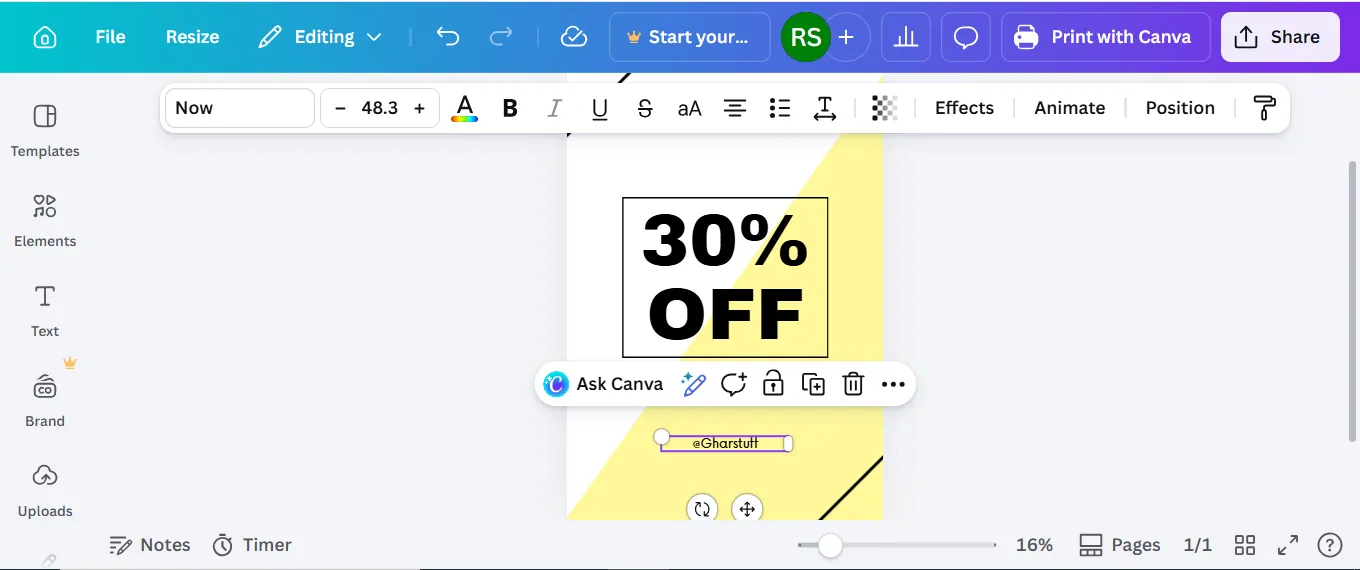
What I did: Asked every customer who paid by phone — UPI or card — if they’d like to receive deal alerts on WhatsApp. Built a list of 140 opted-in regulars over 8 weeks. Every time I had near-expiry stock or a slow afternoon, I sent one broadcast with a Canva image and a specific offer: “Fresh paneer, 3 days to expiry — 30% off until 7 PM today.”
What happened: The first broadcast — paneer at 30% off — sold out in 4 hours. Average response rate: 40% of the list visits within the same day. It turned my slow afternoons into my busiest sales windows.
💡 The rule that made this work: Never broadcast more than 3 times a week. Never broadcast without a specific reason. Always include a photo — Canva graphics with the product photo and discount percentage get double the response rate of text-only messages.
For US/UK/AU stores: WhatsApp penetration in the US is around 25–30%. Use SMS via Brevo instead — same idea, different channel, higher open rates.
📱 For US/UK Stores — The Tool I’d Use Instead of WhatsApp: Brevo’s free plan gives you 9,000 emails/month and SMS capabilities. SMS open rates in the US are above 90% — higher than WhatsApp in India. Check Brevo Free Plan →
Method 3 — Canva Discount Signs: Turning the “Discount Shelf” Into a Customer Magnet
What I did: Before Canva, I wrote discount signs on cardboard. The discount shelf existed but nobody stopped at it — it looked like an afterthought. I spent one Saturday making five Canva templates: product photo, large discount percentage, and a “Limited Time” badge. Now every discount item has a professional sign that actually stops customers.
What happened: Customers started asking about the discount shelf by name within two weeks. One customer told me it’s why she switched from a nearby competitor — “your store always has deals, their shelves just look like a mess.” The discount shelf now accounts for 12% of weekly revenue, up from under 3%.
See how I use Canva alongside the waste reduction system: How I Reduced Food Waste by 35%
🎨 The Design Tool I Use for Every Store Sign: Canva Free — 2.1 million templates, no design experience needed, saves your templates so every new discount sign takes 2 minutes. Try Canva Free →
Method 4 — Google Reviews Strategy: The Difference Between Showing Up and Being Chosen
What I did: I had 4 reviews after 5 years. I printed a small card with a QR code linking to my Google Review page and placed it at the counter. When a regular customer mentioned they liked the store, I handed them a card: “If you have 30 seconds, a Google review really helps us compete with the bigger chains.”
What happened: Went from 4 reviews to 31 in six weeks. My ranking improved from page 2 of Maps results to consistently top 3. More ranking = more “found you on Google Maps” customers. The reviews also created social proof that converted searchers into first-time visitors.
📋 The QR code approach: Google Business Profile → Get More Reviews → copy the review link → qr-code-generator.com (free) → generate QR code → print on a small card. Total cost: $0. Total time: 15 minutes.
One thing I never do: Ask for 5 stars. Ask for “an honest review.” Authentic reviews with specific details rank better and convert searchers better than generic ratings.
Method 5 — Google Posts: Free Promotional Content That Appears Directly in Search Results
What I did: Google Business Profile has a Posts feature that almost nobody uses. Write a short update with a photo and it appears directly in your Google search listing for 7 days. I post every Wednesday: a specific weekly deal, a new arrival, or a festival offer.
What happened: My Wednesday post about fresh mango arrivals got 280 views in one day — from people who had never visited my store. Two came in that same day specifically for the mangoes. Posts with photos get 3–5x more views than text-only posts.
✅ What to post each week: Tuesday — fresh delivery arrival. Wednesday — midweek deal. Friday — weekend special. One post per week minimum. Zero posts = Google treats your profile as less active = lower ranking = fewer customers finding you.
Tier 2 — Free In-Store Methods (Turn One-Time Visitors Into Regulars)
Getting someone through the door is half the battle. These methods solve the second half — turning a first visit into a regular habit. Most stores ignore this entirely and wonder why new customers don’t come back.
Method 6 — The Near-Expiry Discount System: Turning Food Waste Into a Customer Loyalty Tool
What I did: My Python expiry alert system (built to work with Zoho Inventory’s free plan) emails me every morning with items expiring within 7 days. Instead of throwing those items away, I move them to a dedicated discount shelf with a Canva sign and broadcast the deal on WhatsApp.
What happened: I now sell 78% of near-expiry stock instead of wasting it. But the unexpected effect: the discount shelf became a reason for customers to visit more frequently. Three regulars told me they come in 2–3 times a week specifically to check what’s on the discount shelf. One of them now spends more at my store per month than any other customer — she started coming for near-expiry deals and discovered everything else.
Why this gets more customers: A reason to visit more often is the same as a reason to choose your store over a competitor. The discount shelf creates that reason at zero cost.
The full waste reduction system including the Python expiry tool: How I Reduced Food Waste by 35% Using Free AI Tools
Free download of the Python expiry alert: Zoho Inventory Setup Guide for Small Retail
Method 7 — The “Know Your Regular” System: What Vishal Started Doing That Changed Everything
What I did: Vishal, my staff member of 3+ years, remembered names and usual orders. He’d ask “the usual?” before customers said anything. I formalised this into a simple system: a paper notebook with the names and “usual orders” of our top 40 regulars. When they arrive, he greets them by name and mentions if their usual product has a deal or is running low.
What happened: Two customers who had stopped coming back returned after Vishal greeted them by name on what had been a casual price-check visit. The cost of implementing this: one conversation with Vishal and a ₹20 ($0.24) notebook.
💡 This isn’t an AI tool. It’s a shelf and a habit. For small stores, the competitive advantage over big chains isn’t price or range — it’s that you know your customers as people. Don’t automate this. It’s your biggest differentiator and it costs nothing.
Method 8 — Product Pairing Displays: The Silent Upsell That Also Drives Word-of-Mouth
What I did: I started placing complementary products together with a small Canva sign: atta and ghee during winter (“for parathas”), tomatoes and cheese during school season (“quick pasta tonight?”), cold drinks and chips during summer. No discount — just proximity and a contextual suggestion.
What happened: Average basket size increased 18% in the first month. Two new customers came in specifically because a friend mentioned “the store that shows you what goes together.” The displays became free word-of-mouth marketing.
For US/UK stores: Game day pairings before the Super Bowl, pumpkin spice everything in October, holiday baking sets in December. Context creates purchase decisions everywhere.
All the free AI tools I use for store operations including Canva: 15 Best Free AI Tools for Small Retail
Tier 3 — Free Community Methods (Become the Store Your Neighbourhood Talks About)
These methods are slower but have the longest-lasting effect. Once your store becomes part of how a neighbourhood thinks about itself, no competitor can easily take that position from you.
Method 9 — The Weekly Delivery Video: Authenticity That Big Chains Can’t Replicate
What I did: Every Tuesday when fresh produce arrives, Vishal takes a 30-second video of the delivery being unloaded. I add text overlay using CapCut (free, no watermark) — “Fresh this morning 🌿 Direct from supplier” — and post it to WhatsApp Status and Instagram Stories simultaneously. Takes 8 minutes total.
What happened: Regulars started asking about the Tuesday delivery specifically — “Did the good tomatoes come in this week?” One customer told me she started planning her weekly shopping around our Tuesday delivery. That’s a scheduling decision made in our favour at zero cost.
Why this works: Big supermarkets can’t show you a 30-second video of your specific store’s delivery. An unpolished video of a real delivery converts better than a professional marketing photo because it’s real.
For US/UK stores: Same approach — Instagram Stories and Facebook. Add your location tag every time so new people in the neighbourhood can discover you.
Method 10 — The Local Notice Board: Become the Community Hub
What I did: I set up a small physical notice board near my entrance. Local tutors, repair services, and small businesses put up cards for free. In return, I ask each to send one WhatsApp message to their customer list mentioning my store. I also share local information on my broadcast — road closures, new bus routes, local events — things useful regardless of whether someone is shopping.
What happened: Three businesses now actively refer customers to my store. A local tutor tells parents: “Pick up after class — there’s a good grocery right there.” In the last 60 days I can trace at least 8 new customers directly to this referral network. Cost: $0.
✅ The insight: Every small business in your neighbourhood has customers who overlap with yours. When you make yourself useful to those businesses at no cost, they become unpaid ambassadors.
For US/UK stores: A local Facebook Group or Nextdoor presence does the same job digitally. Post useful local information alongside store updates. People remember the source of useful information.
Google Business Profile vs Paid Ads — Which Gets More Customers for a Small Grocery Store?
This is the question I get most from US and UK store owners who are considering running Facebook or Google ads alongside their free methods. Here’s the honest comparison based on my own testing.
| Method | Monthly Cost | New Customers/Month | Time to First Result | Longevity |
|---|---|---|---|---|
| Google Business Profile (free) | $0 | 10–25+ (builds over time) | 1–2 weeks | Compounds monthly |
| Google Reviews (free) | $0 | Multiplies GBP results | 3–4 weeks | Permanent — reviews stay |
| WhatsApp/SMS broadcasts (free) | $0 | Existing customers, more visits | Same day | Works every broadcast |
| Facebook paid ads (local) | $200–400/mo | 10–20 (stops when you stop paying) | 3–5 days | Zero — ends when budget ends |
| Google Local ads (paid) | $150–300/mo | 15–25 (stops when you stop paying) | 2–3 days | Zero — ends when budget ends |
My verdict: Paid ads reach customers faster in the first week. But they stop the moment you stop paying. GBP, reviews, and weekly posts compound month after month — the ranking improves, the review count grows, and new customers keep finding you without any ongoing cost. For a small grocery store with thin margins, that compounding free growth beats a paid channel almost every time.
When paid ads make sense: You’ve maxed out all 10 free methods and you want to reach customers in a wider area. Or you’re running a time-limited promotion (grand reopening, festival sale) where speed matters more than cost efficiency. Outside of those scenarios, start with free.
Free vs Paid — When to Upgrade Your Customer Acquisition Tools
| Tool Category | Free Option | When to Upgrade | Paid Option |
|---|---|---|---|
| Email / SMS Marketing | Brevo Free — 9,000 emails/month | When you have 500+ contacts and need automation | Brevo Starter (~$10.80/mo) |
| Review Management | Manual QR code + Google | When you’re getting 20+ reviews/month and need tracking | GatherUp ($49/mo) |
| Local SEO Tracking | Google Business Profile free insights | When you need to track ranking by zip code / postcode | Local Falcon ($20/mo) |
| Design | Canva Free — 2.1M templates | When you need background remover more than 5x/month | Canva Pro ($12.99/mo) |
| Video Editing | CapCut Free — no watermark | When you need advanced editing for ads or YouTube | CapCut Pro ($7.99/mo) |
My rule: Don’t pay for any tool until the free version has already saved you enough time or brought you enough customers to cover the upgrade cost. For most small grocery stores, the free tier of every tool above is genuinely enough for the first 6–12 months.
What I Tried That Didn’t Work — So You Don’t Waste Your Weekend
| What I Tried | What Happened | Why It Failed |
|---|---|---|
| Facebook page organic posts | 0–3 views per post. No customers traced to it. | Facebook organic reach for business pages is effectively zero without paid promotion. Post on WhatsApp Status instead — same audience, 100x more reach. |
| Printed neighbourhood flyers | Spent ₹800 ($9.50) on 200 flyers. Could not trace a single customer to them. | People in my neighbourhood already know the store exists. Flyers reach people who have already decided where to shop. GBP reaches people still deciding. |
| Posting deals in local WhatsApp community groups | Asked to stop by the group admin after 2 posts. Zero customers. | Community groups treat store promotions as spam. Build the notice board relationship first, earn community trust, then group members will welcome you. |
| Generic “Follow us on Instagram” in-store sign | 4 followers in 6 weeks. | Nobody follows a store unless the content is interesting. Lead with the Tuesday delivery video, then ask for the follow. Interesting content first, call to action second. |
Your 30-Day Plan to Get More Customers in Your Grocery Store
Don’t implement all 10 methods at once. This is the sequence that worked in my store — each week builds on the previous one and takes under 4 hours total per week.
| Week | Focus | Actions | Time | Expected Result |
|---|---|---|---|---|
| Week 1 | Digital foundation | Set up GBP completely. Upload 15+ photos. Add hours, description, products. Post first update. | 3–4 hours one-time | Appears in local search within 3–7 days |
| Week 2 | Reviews + Canva | Print QR code review card. Ask 5 regulars for honest reviews. Make 3 Canva discount sign templates. | 2 hours one-time | First new reviews. Discount shelf starts looking professional. |
| Week 3 | WhatsApp + Tuesday video | Start asking customers for WhatsApp opt-in. Film first Tuesday delivery video. Post to WhatsApp Status. | 30 min setup + 8 min/week | First 20–30 opted-in contacts. First “I saw your video” response. |
| Week 4 | Community + referrals | Set up notice board. Approach 3 nearby businesses. Start posting useful local info on WhatsApp. | 2 hours one-time | Referral customers begin arriving by weeks 6–8. |
✅ The honest timeline: Month 1 is setup and first results. Month 2 is when GBP searches start growing noticeably. Month 3 is when new customers start becoming regulars. Give it 90 days before judging any single method — the compounding is real but takes time to show up clearly in the numbers.
📥 Free Toolkit — GBP Checklist + Waste Tracker + ChatGPT Prompts
Every free tool mentioned in this article — GBP setup checklist, WhatsApp broadcast templates, AI Waste Tracker, and the full ChatGPT ordering prompt library. Free, no credit card.
Free. No spam. Unsubscribe anytime.
Complete setup — 0 to 150+ searches in 30 days 🗑️ How I Reduced Food Waste by 35%
The discount system that also brings customers back 🛠️ 15 Best Free AI Tools for Small Retail
Canva, ChatGPT, GBP — every tool in this article 📦 How to Reduce Stockouts in a Small Grocery Store
Keep the customers you get — never run out of stock
Last updated: April 2026. All results from my real store in Hisar, India. Author: Rahul Saini, grocery store owner and founder of SmallRetailAI.com. Which method worked best for your store? Tell me in the comments — I read every one.
What is the fastest free way to get more customers in a grocery store?
Google Business Profile is the fastest — and it’s completely free. Set it up properly (complete every field, add 15+ photos, write a description that mentions your neighbourhood name), post one weekly update, and you’ll appear in ‘grocery store near me’ searches within a week. I went from zero online visibility to 10 new walk-in customers in my first 30 days. No paid ads. No agency. 20 minutes of setup and 10 minutes every Wednesday.
Do these methods work for small grocery stores in the US or UK, not just India?
Yes — all 10 methods work globally. Google Business Profile is actually stronger in English-speaking markets because Google has more local search data for the US and UK. WhatsApp broadcasts work better in India; replace them with SMS via Brevo for US/UK customers. The Canva sign strategy, review QR codes, Tuesday delivery videos, and product pairing displays work identically everywhere. I’ve noted US/UK-specific adaptations in each method above.
How long before I see new customers from Google Business Profile?
Most stores see their first ‘I found you on Google Maps’ customer within 1–2 weeks of completing their GBP profile. The search ranking builds over 30–90 days. My store went from 0 to 150+ monthly searches in 30 days, and 400+ searches by day 90. The biggest jumps came after: completing every section of the profile, reaching 10+ reviews, and posting consistently for 3+ weeks.
Is paid advertising worth it for a small grocery store?
For most small grocery stores competing locally — no, not before you’ve maxed out the free methods. Google Business Profile, WhatsApp broadcasts, weekly posts, and a review strategy can bring 20–30 new customers per month at $0. Paid ads to the same local audience would cost $200–400/month for similar results. Start with free. Paid ads become worth it only when you’ve extracted every bit of value from the free channels and want to reach a wider area.
What should I post on Google Business Profile every week?
Three types of posts work consistently well: fresh delivery arrivals with a photo, specific weekly deals (‘30% off paneer this Friday’), and seasonal or festival content. One post per week is the minimum to stay algorithmically active. Three posts is the sweet spot. I post every Wednesday morning — a specific deal or new product arrival with a photo. Five minutes, every week, without fail.
How do I build a WhatsApp broadcast list without annoying customers?
Always ask for explicit permission before adding anyone. When a customer pays, ask: ‘Would you like deal alerts on WhatsApp? I send 2–3 times a week maximum.’ The key rules: never broadcast more than 3 times a week, always include a specific deal or useful information, and always include a photo. Follow those three rules and your opt-out rate will stay under 5%.
My store is in a small town — do these methods still apply?
They apply even more in a small town. Competition for local search rankings is lower in smaller markets. A well-maintained Google Business Profile in a small town often dominates local search results within 2–3 weeks because most competitors have incomplete profiles. The community methods — notice board, local referrals — also work faster in small towns because the community is more tightly connected.
I already have regulars — why do I need to get more customers?
Regulars are the foundation, not the ceiling. Research shows that 40%+ of customers at any store don’t return the following year due to factors outside the store’s control — they move, their habits change, they find a closer option. A store that doesn’t attract new customers is slowly losing its base even when it feels stable. The goal is to keep the regulars while building a steady flow of new customers so the total grows rather than just replaces itself.
About the Author
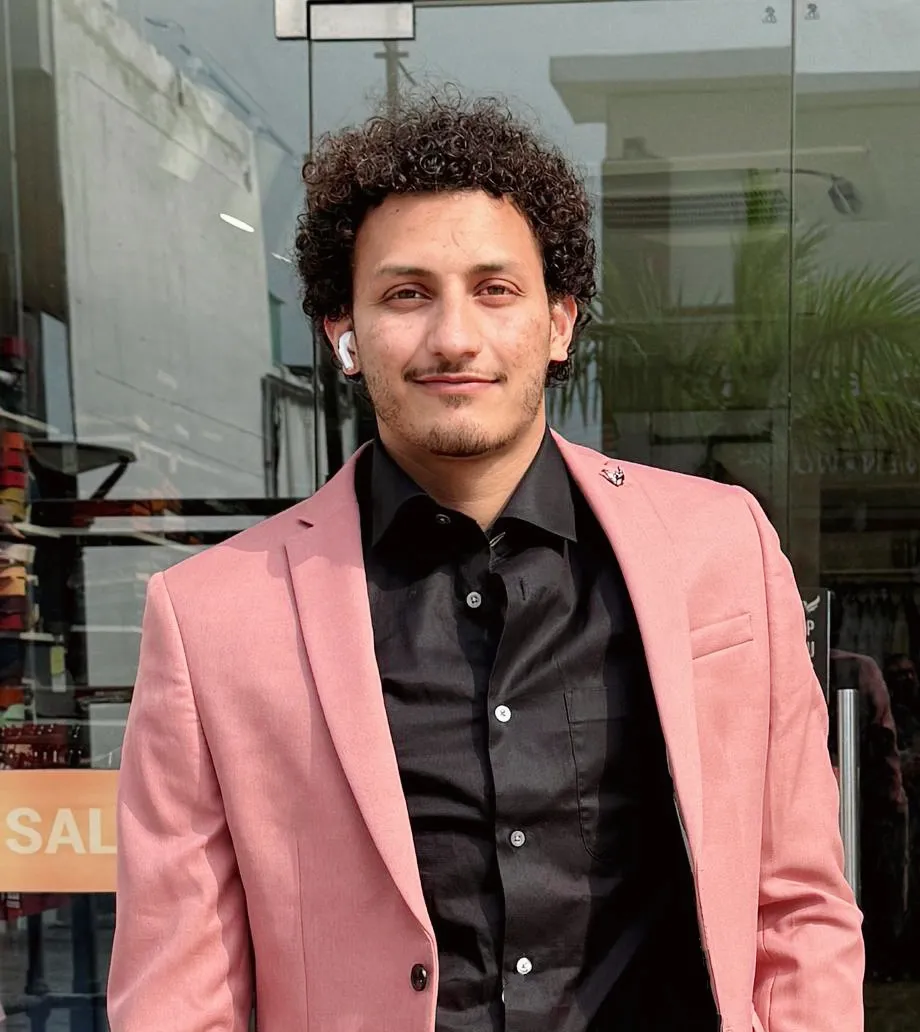
Rahul Saini
Grocery store owner in Hisar, India, running gharstuff.com since 2019 with 800–1,200 SKUs daily. I test AI tools in my real store — with real staff, real customers, and real consequences when something doesn’t work. Every number on this site is from my actual store.
Read My Full Story →