
🔄 Last updated: July 23, 2026
The best way to reduce food waste small grocery store is to combine free AI tools with a simple daily routine — and in 60 days I cut mine by 35%. — Zoho Inventory, Google Sheets, and ChatGPT — with no technical skills and no extra staff. Here’s exactly what I did, what didn’t work, and the real numbers.
💰 New user bonus
Sign up through this link and get $100 in Zoho Wallet credits — use them toward any Zoho subscription. Free plan stays free. Credits apply if you ever upgrade.
Zoho Inventory free plan60 Days • 5 Free Tools • $180/Month Saved • Real Store Photos
⚡ What You’ll Get From This Guide
Food waste reduced
Saved per month
Setup time
Cost of all tools
📥 Want the template first? Jump to the free download section — the Excel waste tracker is ready to use from day one, no setup needed.
📚 Table of Contents
The Waste Problem Nobody Talks About Openly
Nobody wants to admit how much they throw away. It feels like failure.
When I talk to other store owners, everyone nods when the conversation turns to waste. But nobody volunteers their numbers. Because once you calculate it, you can’t unsee it.
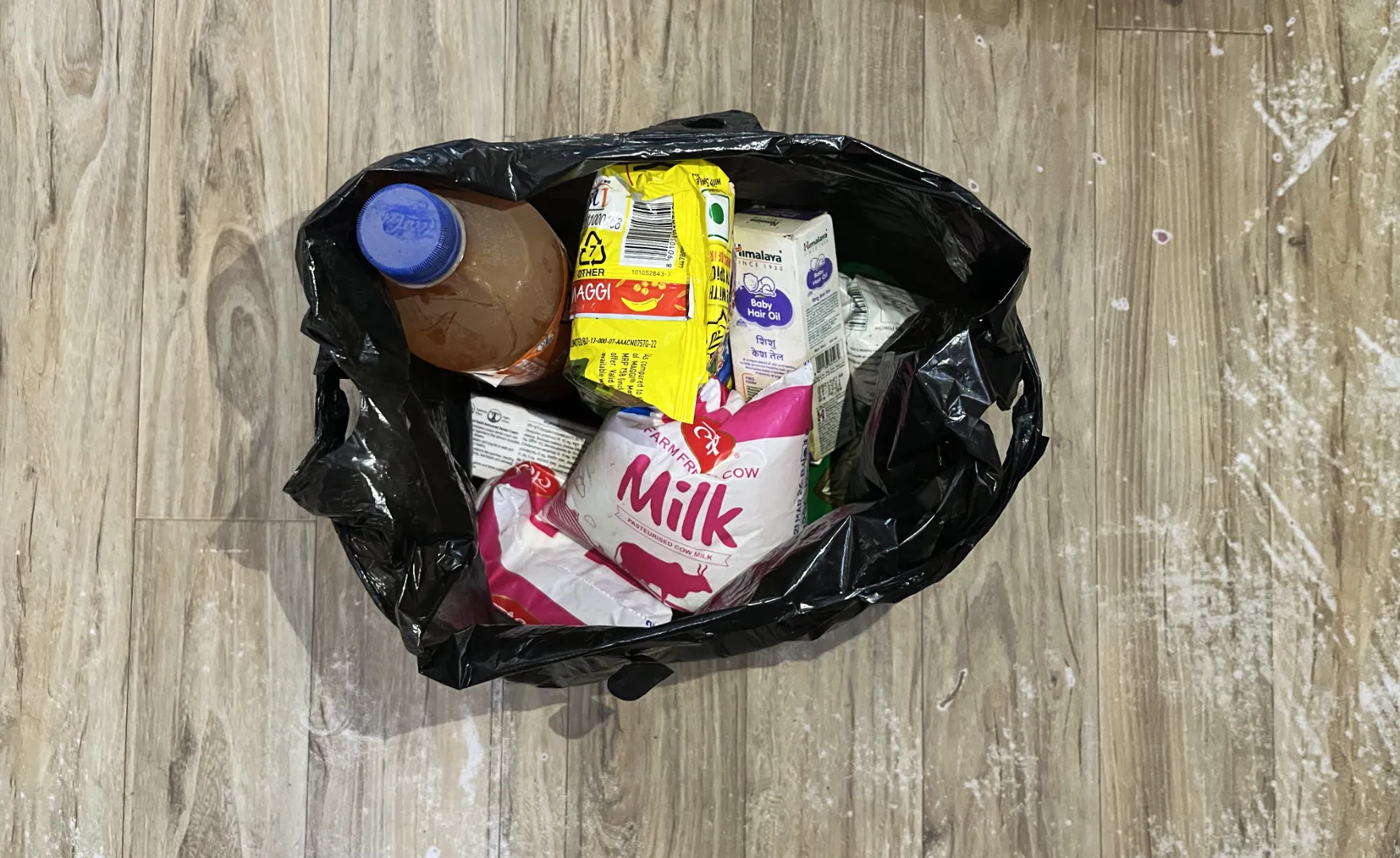
I was standing in my cold storage room at 7 AM on a Tuesday. In my hands was a garbage bag with 11 packets of milk that had expired the day before. Gone. I did the math on my phone. That bag was just dairy. When I added the soft tomatoes, the bread that didn’t sell, and the packaged snacks nobody touched — I was throwing away nearly ₹15,000 every month. That’s $180. That’s my profit. In the trash.
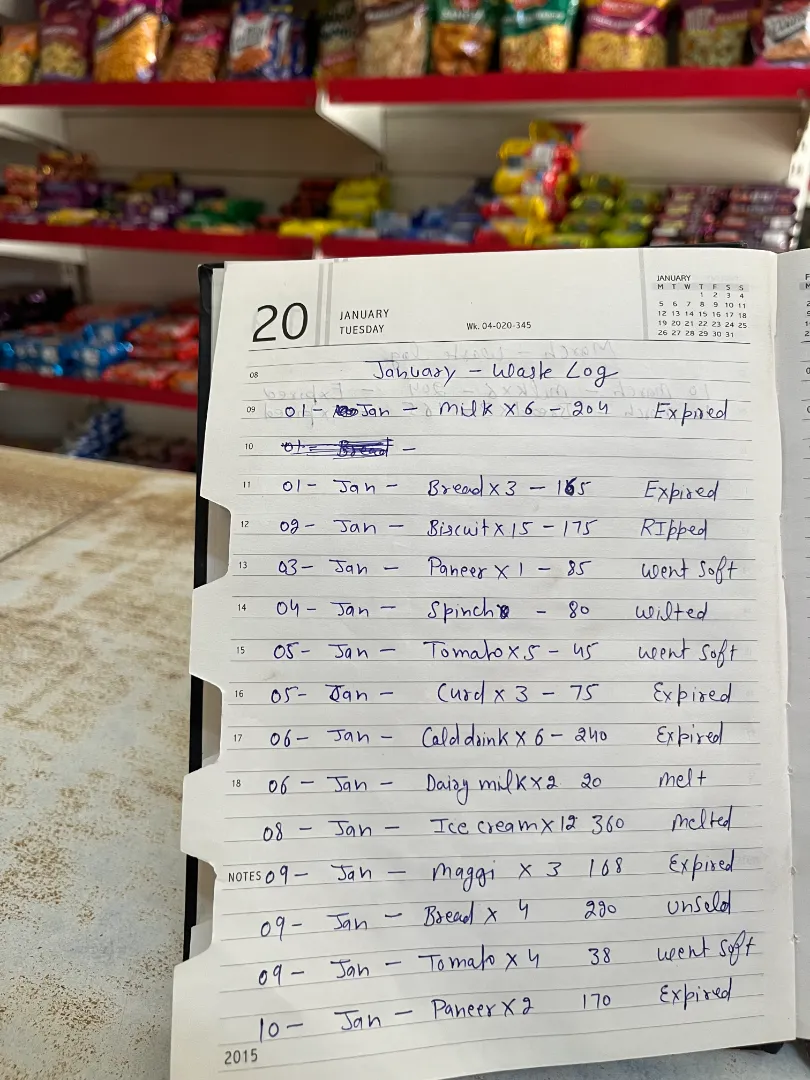
I stood there for a minute just holding the bag. Then I pulled out my phone and started a note called “Waste Log.” That was the turning point.
Here’s what the data says — the stuff we all suspect but never look at directly:
- Small stores like ours lose 4–8% of revenue to waste every year
- Chains lose half that — because they have systems we don’t
- 80% of our waste comes from 20% of products: dairy and fresh produce
According to the National Retail Federation,
small independent stores lose 4–8% of revenue to waste annually.
The cost isn’t just the product you throw out. It’s the staff time spent checking dates manually, the customers who walk out because your shelves look picked over, and the quiet demoralization of watching good stock go bad when you know you could have sold it.
I’m not a chain with a million-dollar software budget. I’m just a store owner who got tired of throwing money in the trash. A few months before this, I’d spent 60 days testing the best AI inventory tools for small retail — that taught me what works. But waste was still my biggest leak. So I went deeper.
Does any of this sound familiar?
What Was Actually Happening in My Store
For one month, before changing anything, I just watched. Every time something went in the trash, I recorded it. Category. Approximate cost. Reason if I knew it.
Here’s what I found:
| Category | What I Was Losing | Monthly in $ |
|---|---|---|
| Dairy & milk | 10–15 packets/week expiring | $72 |
| Vegetables | 15–20% of stock going soft | $60 |
| Packaged goods | Slow movers hitting expiry | $48 |
| Total | $180 |
₹15,000 a month. My profit. In the trash.
The non-financial costs hurt just as much. I was spending 10–12 hours a week counting stock manually. I told customers “sorry, we’re out” 11 times in one month — not because I didn’t have the product, but because I’d ordered wrong. Vishal, who’s been with me 3 years, was still using his paper notebook because he didn’t trust the numbers. And honestly? I didn’t either.
I knew something had to change. But I couldn’t afford expensive software.
Before I found what worked, I tried something that completely wasted my time: Oracle NetSuite. It’s enterprise-level software built for companies with full-time accountants. The demo took 3 hours. The setup quote was more than my store’s monthly rent. I closed the laptop and never went back. I’m telling you this so you don’t waste the same 4 hours I did.
The 5 Free Tools I Actually Used (After Trying 8)
I want to be clear — I didn’t find these tools in some blog post. I tested about 8 things over 2 months. Oracle NetSuite wasted my time. Two others I tried were free but completely useless for a store with perishables. These 5 are the ones that actually survived contact with a real busy store.
1. Zoho Inventory Free Tier — The Expiry Alert System
I almost skipped Zoho because the dashboard looked complicated. Lots of buttons, menus that didn’t make sense at first glance. I’m glad I didn’t.
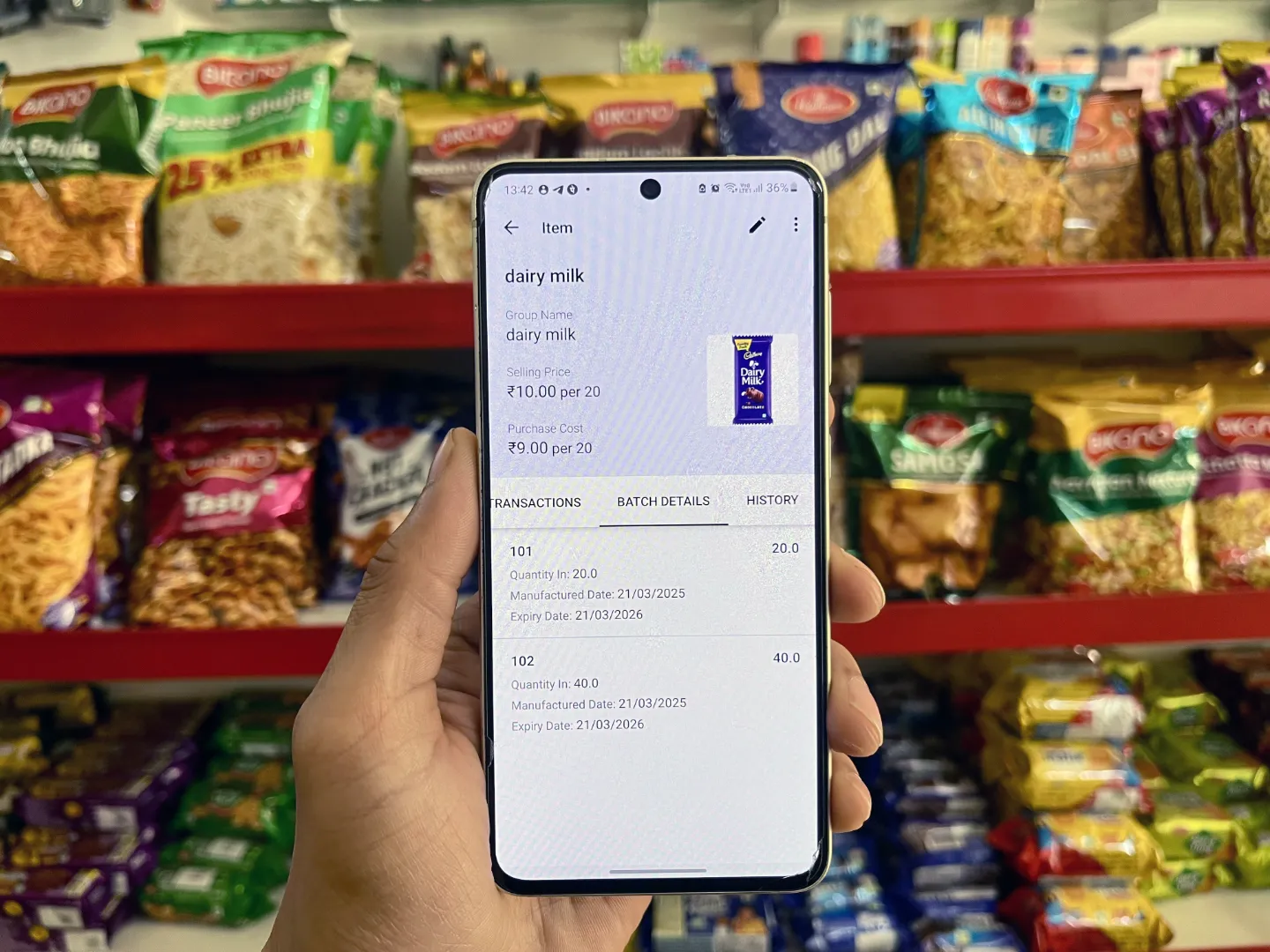
Here’s what it actually does for waste: you set up expiry alerts. When milk is 7 days from expiring, Zoho tracks your expiry dates through custom fields. I built a free Python script that reads those dates via the Zoho API and emails me alerts every morning — full setup guide here. That’s it Simple, But that simple thing stopped my biggest leak.
The free plan handles up to 1,000 SKUs and 50 orders a month. For a store my size, that’s plenty. I’m still on the free tier 6 months later.
The setup took me one Saturday afternoon — with one 45-minute detour because I imported my product list in the wrong format and had to start over. Vishal watched me curse at the computer and offered tea. I took it. When I finally got it working and the first alert came through — a paneer batch expiring in 5 days — I felt like I’d actually done something.
First week result: The system caught 23 items I would have completely missed. Things at the back of shelves, products we don’t sell often, stuff that would have expired quietly. The moment it clicked: Vishal came to me mid-week and said, “This thing keeps buzzing about paneer. Should we put it on discount?” That was day 9.
| Setup time | One Saturday afternoon |
| Free plan limit | 1,000 SKUs, 50 orders/month |
| Week 1 result | 23 near-expiry items caught |
| Cost | $0 |
2. ChatGPT for Weekly Order Forecasting
I felt slightly ridiculous typing my milk sales into a chatbot. Then it predicted a slow week perfectly, and I stopped feeling ridiculous.
Every Monday morning, I open ChatGPT (free tier — the paid version isn’t needed) and paste this prompt:
for the last 4 weeks for [product name]:
Week 1: X units
Week 2: X units
Week 3: X units
Week 4: X units
Next week has [any holiday or local event].
How many units should I order to minimize waste?
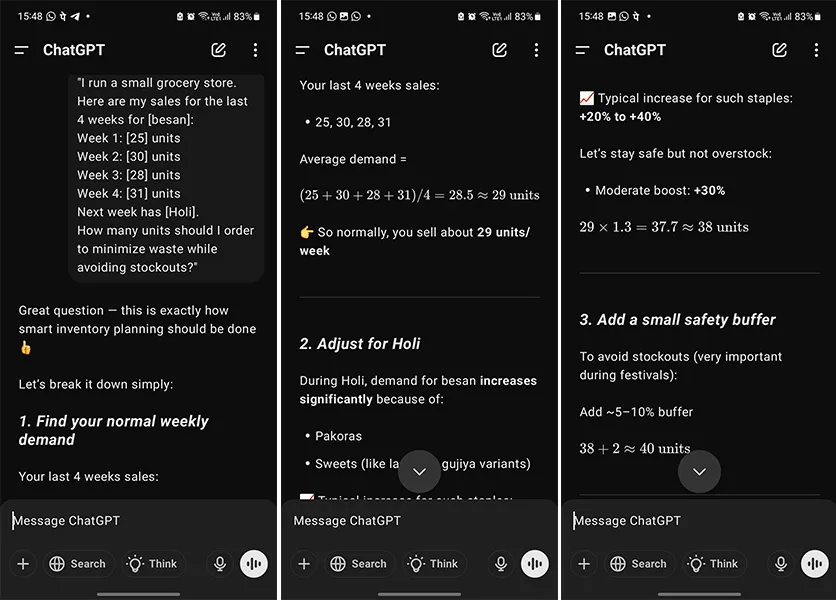
I don’t follow the answer blindly. It’s a guide, not a command. But it gives me a starting point — especially for products I’m always unsure about, like bread before a long weekend.
The first 2 weeks, ChatGPT was mostly wrong. It didn’t have enough data. I over-ordered bread in week 2 because I trusted it too early. By week 3, it started getting closer. By week 4, I was at 85% order accuracy — meaning 85% of the time, I ordered close to exactly what I sold.
⚠️ Important limitation: ChatGPT is useless until you have 3–4 weeks of real sales data. Don’t expect magic in week 1. Give it time to learn your store’s patterns.
| Setup time | 1 hour to learn, 5 min/day after |
| Cost | $0 (free tier) |
| Result after 3 weeks | 85% order accuracy |
| Biggest win | Holiday demand prediction |
3. Google Sheets With a Few Simple Formulas
I know. Spreadsheets. But hear me out — this isn’t fancy.
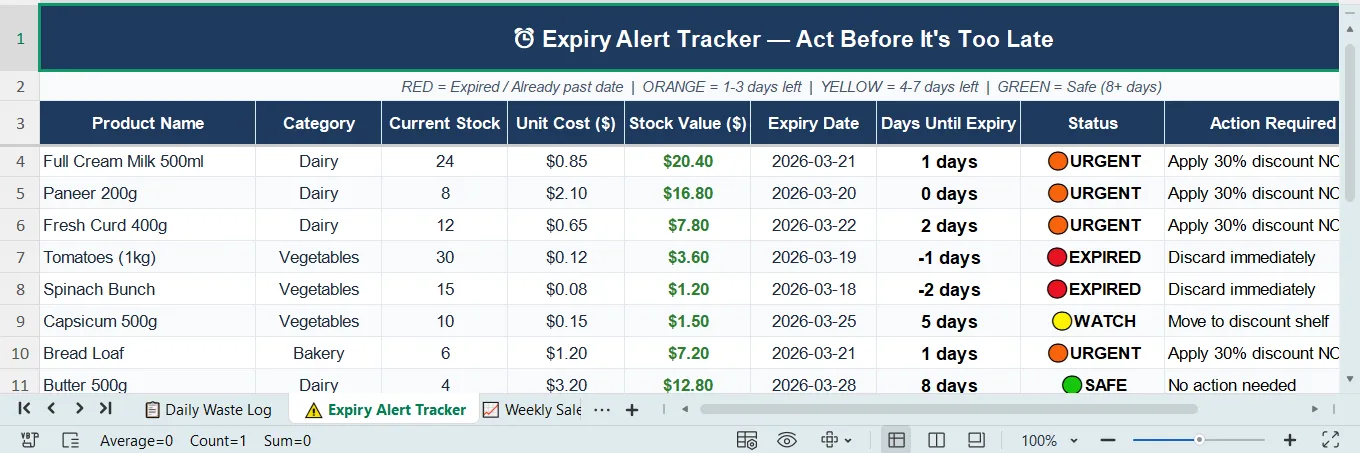
I use three things in my sheet. The AVERAGE formula to see typical weekly sales. The IF formula to flag when stock is running low. And one conditional formatting rule that turns a row red when a product is within 7 days of expiry. That’s it.
Here’s the thing: I didn’t write these formulas. I asked ChatGPT. Exact prompt I used:
Product, Sales Last Week, Current Stock, Expiry Date.
Write me a formula that highlights the entire row
red if the Expiry Date is within 7 days from today.
Took 5 minutes. I copied the formula, pasted it in, and it worked first time. Now I open the sheet every morning and the red rows tell me exactly what needs attention that day. No digging through shelves. No manual counting.
📊 Don’t build this from scratch. I’ve pre-built the entire tracker with all formulas — Daily Waste Log, Expiry Alerts, Weekly Sales Tracker, ChatGPT Prompts, and Staff Checklist all in one file. Download it free below.
| Setup time | 1 hour (including formula setup) |
| Cost | $0 |
| Result | Overstock reduced by 22% |
4. Smartphone Camera + Google Lens — The Expiry Scanner
This one surprised me most. I already had everything I needed.
When new stock arrives, one person spends 15 minutes scanning expiry dates with Google Lens. Open the camera app, point at the printed date on the packet, and it reads the text. You copy the date straight into your Google Sheet, Done.
All of these tools are covered in my roundup of free AI tools for small retail — I tested 15 tools total and most cost nothing.
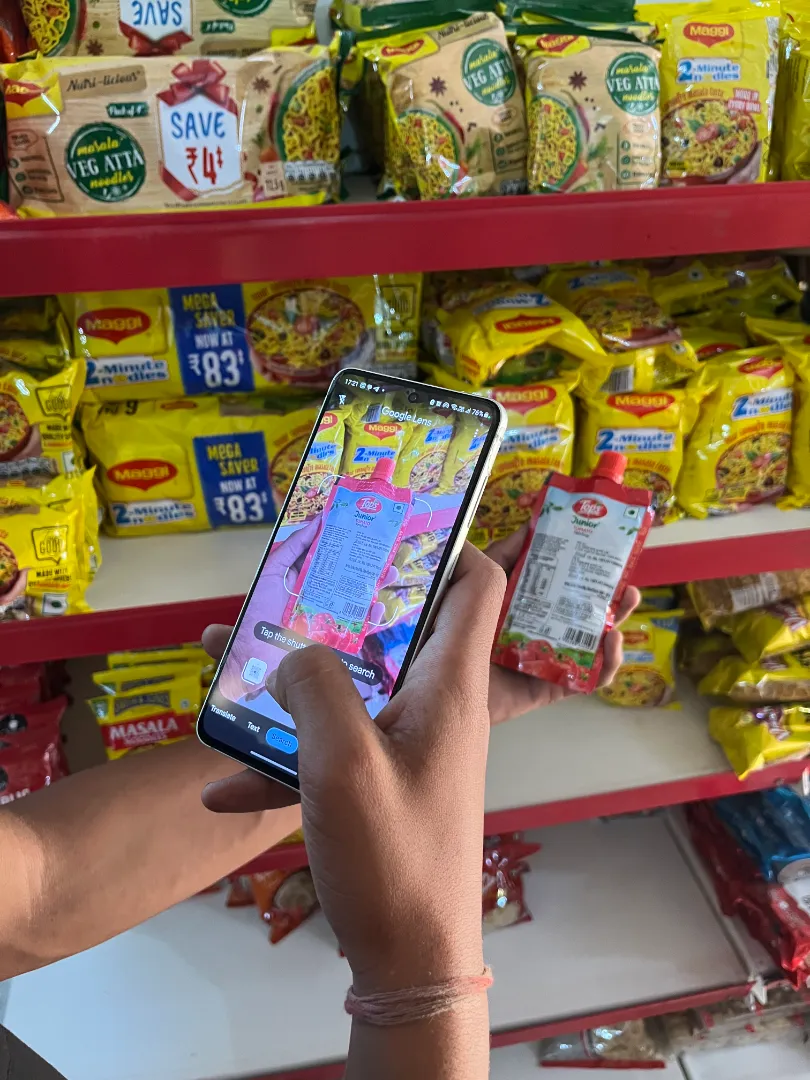
Works on any Android or iPhone. No special scanner. No training. I showed Vishal once and he got it in 2 minutes. He’s better at it than I am now.
Before this, we were checking dates by eye during shelf restocks — meaning we caught maybe 20% of near-expiry items. After week 2 with this system: zero missed expiry dates. Everything that needed to be caught, was caught.
| Setup time | 30 minutes |
| Cost | $0 — phone you already own |
| Time per day | 15 minutes during stock-in |
| Result | Zero missed expiry dates from week 2 |
5. The Near-Expiry Discount Shelf
This isn’t an AI tool. It’s a shelf and a habit. But it saved more money than any app.
Any item 3 days from expiry gets moved to one specific shelf at the front of the store. Marked 30% off with a handwritten sign. That’s the whole system.
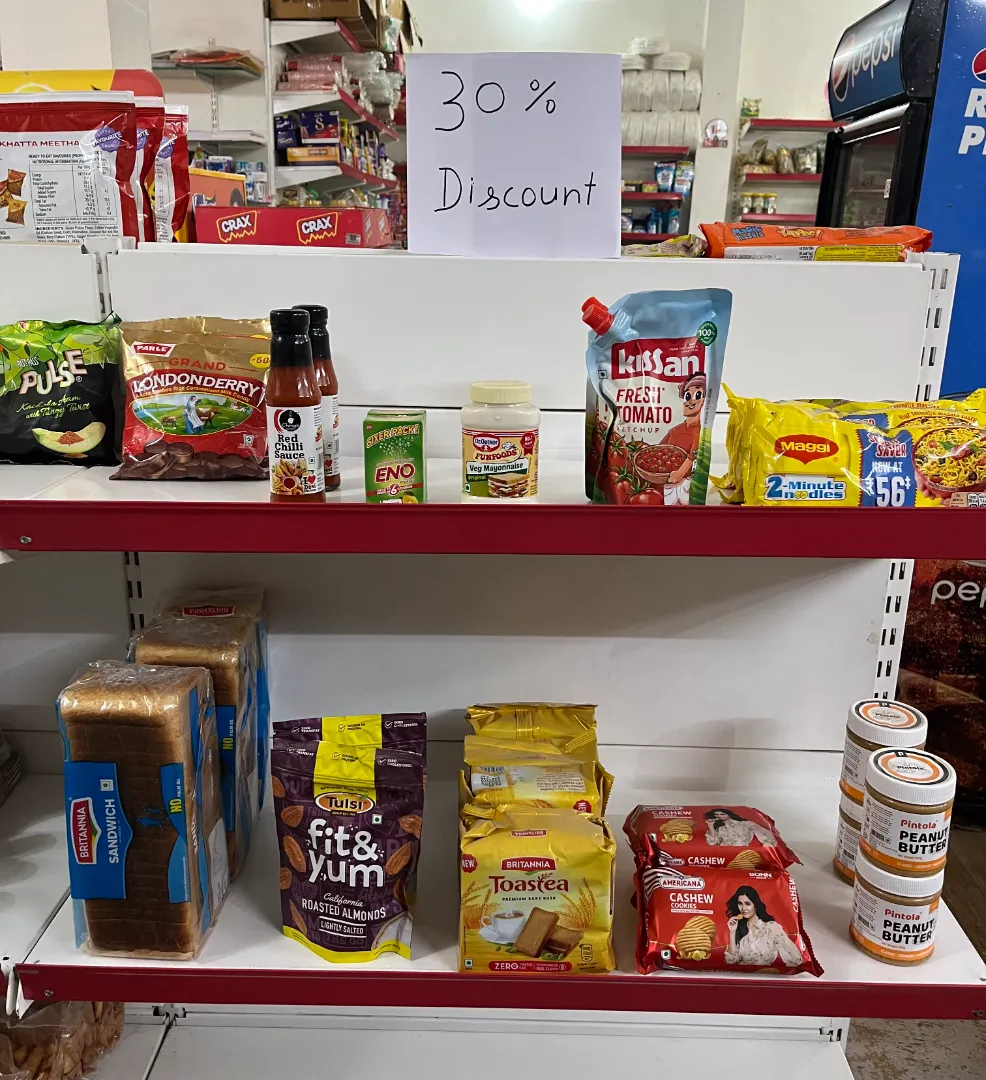
What I didn’t expect: customers started looking for it. Regulars now check the “deal shelf” first when they walk in. One regular buys near-expiry bread every Thursday because she makes bread pudding. She never bought from me before the discount shelf existed.
For US and UK store owners: use your email list or a loyalty app notification instead of WhatsApp. Same idea. “Today’s deals” email once a day takes 5 minutes to send.
Result: 78% of near-expiry stock now sells instead of being thrown away. Before this shelf existed, most of it went in the bin.
| Setup time | 30 minutes to designate the shelf |
| Cost | $0 |
| Near-expiry stock sold | 78% (was near 0%) |
How I Set the Whole Thing Up — Week by Week
Week 1 was a mess. I’m telling you now so you don’t quit when yours is too.
| Week | What I Focused On | How Long It Actually Took |
|---|---|---|
| Week 1 | Audit — just watching and recording waste | 2 hours setup, then 10 min/day |
| Week 2 | Set up Zoho + Google Sheets | One Saturday afternoon |
| Week 3 | First ChatGPT orders + Zoho alerts live | 1 hour, then 5 min/day |
| Week 4 | Refinements + expanding to all categories | 1 hour total |
Week 1 — Just Watch and Record
I put a notebook by the trash. Told staff: “Write down everything that goes in. Category. Why if you know.”
Day 1: they forgot. Day 2: better. By day 5, it was habit. I photographed the worst bags — expired dairy, soft vegetables, bread we couldn’t sell. Not pleasant. But looking at those photos every day was the motivation I needed to actually finish the setup.
Week 2 — The Setup Saturday
Store closed, Saturday afternoon, I sat with my laptop and a chai. Created the Zoho free account. Imported my product list — and immediately messed up the format. The import rejected everything. Spent 45 minutes figuring out the right CSV structure, re-exported, re-imported. Finally worked. Then created the Google Sheets template and showed Vishal the Google Lens scanning. He picked it up faster than I did.
Week 3 — First Real Test
First full week of ChatGPT-guided ordering. Day 1, ChatGPT over-predicted demand for bread — I ordered too much. Adjusted the next order. Zoho alerts started coming in regularly. Staff got used to the buzzing. Vishal stopped rolling his eyes at his phone every time a notification came through.
Week 4 — The Good Part
Launched the discount shelf. Watched customers discover it. Refined reorder points for 20 products based on 3 weeks of real data. At the end of week 4, I sat down and calculated the first month’s savings: ₹3,200. About $38. Not huge. But real. And just the beginning.
✅ The honest truth: The first week felt like extra work for no reward. The second week felt like maybe it was going to pay off. Week 3 was when I started believing in it. Don’t quit in week 1.
How I Reduced Food Waste in My Small Grocery Store — Real 60-Day Numbers
I was expecting maybe 15–20% improvement. This surprised me.
| Category | Before | After 60 Days | Saving/Month | Saving/Year |
|---|---|---|---|---|
| Dairy | $72 | $40 | $32 | $384 |
| Produce | $60 | $42 | $18 | $216 |
| Packaged goods | $48 | $35 | $13 | $156 |
| Total | $180 | $117 | $63 | $756 |
Here’s the full picture beyond just the waste numbers:
| What I Measured | Before | After 60 Days | Change |
|---|---|---|---|
| Monthly waste cost | $180 | $117 | 35% reduction |
| Hours on inventory/week | 12 | 4 | 67% less |
| Stockouts per month | 11 | 3 | 73% fewer |
| Near-expiry items caught | ~2/week | ~14/week | 7x more caught |
| Order accuracy | ~60% | ~85% | 25% better |
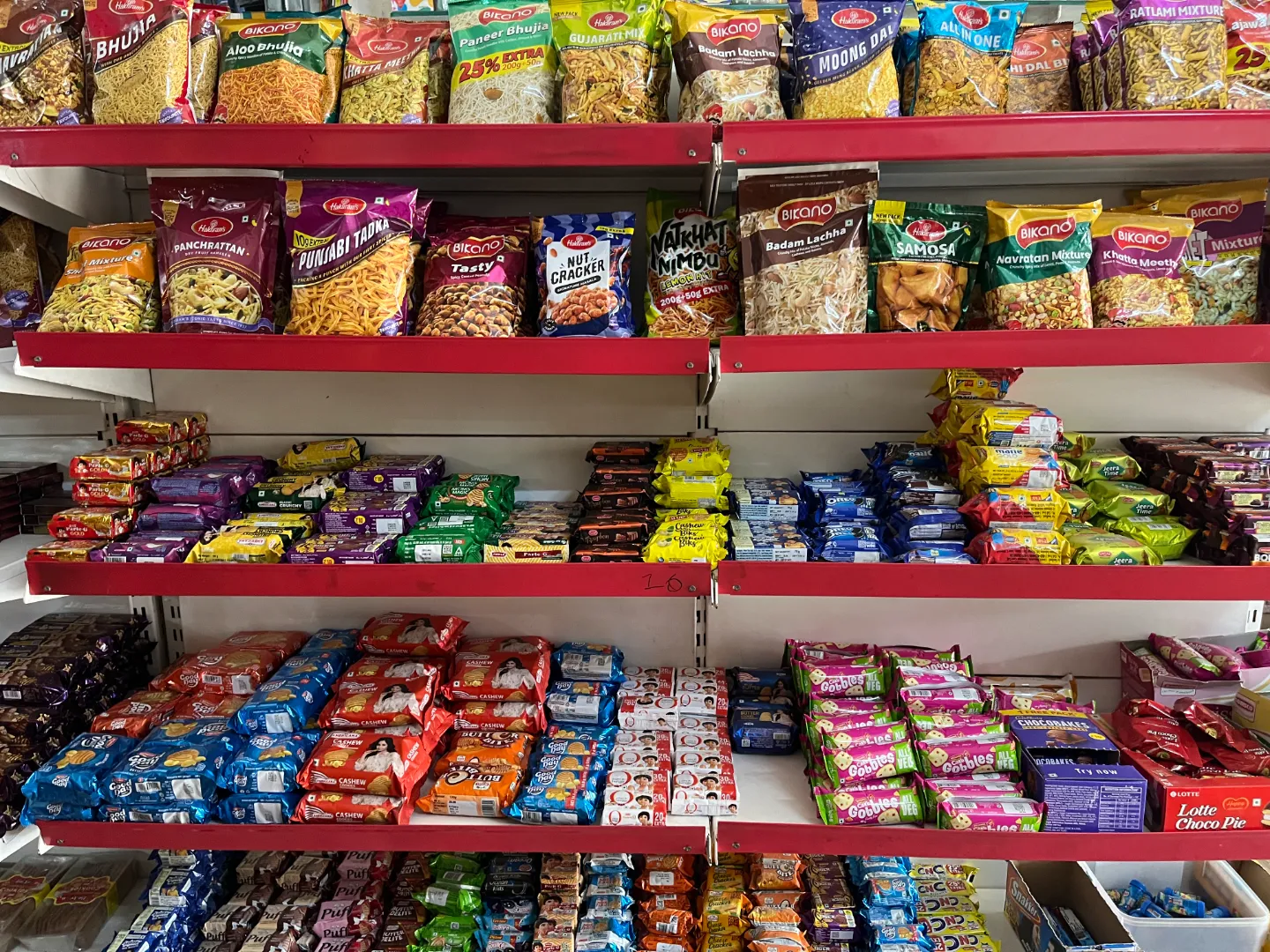
$756 saved this year. Probably $900 next year as the system gets smarter. In 5 years that’s over $4,500 — from a free spreadsheet and a chatbot. That’s a part-time employee’s wages, just from not throwing things away.
I need to be honest: results started in week 3, not week 1. Give it time. Week 1 is just watching. Week 2 is setup. Week 3 is when things start clicking.
What This Means for US, UK and AU Store Owners
My numbers are in Indian rupees. $180 a month is real money here. But the system works the same everywhere — the tools are identical, the problems are identical. Here’s what 35% waste reduction looks like for different store types:
| Store Type | Typical Monthly Waste | What 35% Saving Looks Like | Annual Saving |
|---|---|---|---|
| US convenience store | $800–1,500 | $280–525/month | $3,360–6,300 |
| UK corner shop | £600–1,200 | £210–420/month | £2,520–5,040 |
| AU small supermarket | $900–1,800 AUD | $315–630/month | $3,780–7,560 AUD |
| My store (India) | $180 | $63/month | $756 |
Here’s another way to think about it for US store owners: 8 hours saved per week on manual inventory. At $18/hour — minimum wage in several US states — that’s $144 a week. $7,488 a year. Just from not counting things by hand anymore.
At zero tool cost, this is pure profit recovery. Your margin just went up.
Try Zoho Inventory Free → Get $100 Credits
The Things That Made the Biggest Difference
These aren’t tips from a blog post. This is what I’d tell you if we were sitting down after closing.
🔄 FEFO Beats FIFO Every Time
First Expiry First Out — not just First In First Out. Check dates, not just rotation. That product at the back might expire sooner than the one that arrived yesterday. Vishal owns this now. Every restock, he checks dates first, rotates by expiry, not by arrival.
📦 Order Smaller, More Often
I used to order dairy for the whole week on Monday. Now I order half on Monday, half on Thursday. Less stock sitting around, less that expires before it sells. More deliveries, yes — but the waste saving is worth it. For perishables especially, frequency beats bulk.
👤 One Person Owns Expiry Checks
Not everyone. One person. Every morning. 10 minutes. Part of the opening routine — same as unlocking the door and switching on the lights. Vishal owns it now. When it’s everyone’s job, it’s nobody’s job. When it’s one person’s job, it gets done.
📋 The 5-Item Rule
Don’t try to fix all 200 products at once. This week, identify your top 5 waste items — the ones you throw away most. Fix just those. Next week, another 5. In a month, you’ve addressed 20 products. That’s where most of your savings will come from anyway.
🏷️ The Discount Shelf Becomes a Feature
Customers started asking for it by name. “Anything new on the deal shelf today?” That moment — when your near-expiry problem becomes a customer attraction — is when you know the system is working. That’s free money you were literally throwing away before.
Free Download: My Actual Template and Prompts
📥 Free Download: AI Waste Tracker (Excel + Checklist)
I built this for my own store. It’s not pretty but it works — and it’s been tracking my waste for 6 months straight.
What’s included in the free download:
- 📋 Daily Waste Log — record every thrown item, monthly total calculates automatically
- ⚠️ Expiry Alert Tracker — enter expiry dates, file tells you 🔴 EXPIRED / 🟠 URGENT / 🟡 WATCH / 🟢 SAFE every morning you open it
- 📈 Weekly Sales Tracker — log what you sell, get your ChatGPT order suggestion automatically
- 💰 Savings Dashboard — watch your monthly savings grow, 5-year projection built in
- 🤖 5 ChatGPT Prompts — copy-paste ready, Monday morning order forecasting
- ✅ Staff Daily Checklist — print and laminate for Vishal, 25 daily tasks across 5 sections
Works in Excel, Google Sheets, and LibreOffice. No macros. No passwords. Just open and fill in your products.
Enter your email to get instant access:
👉
Submit and Get Instant Access To Our Full Download Repository Right Away.
Free. No credit card. Instant access after email confirmation.
Manual vs AI: The Honest Comparison
| Manual Method | With Free AI Tools | |
|---|---|---|
| Hours per week | 12 | 4 |
| Waste reduction | 5–10% | 35% |
| Expiry catch rate | ~20% | ~90% |
| Staff training time | 2 days | 2 hours |
| Monthly cost | $0 | $0 |
| Works at 500+ SKUs | No | Yes |
The tools don’t make decisions for you. They just make sure you have the right information before you do. You’re still the store owner. You still know your customers, your suppliers, your neighbourhood. The AI just fills in the gaps where human memory and manual counting fail.
Now that waste is under control — here’s how I brought 25+ new customers in the door →
FAQs About reduce food waste small grocery store with AI Tools
Q1: Do I need to be technical to do this?
A: No. I’m not technical. I’m a store owner who learned as I went. If you can use WhatsApp and basic Excel, you can set this up. The tools are designed for normal people, not programmers. Zoho has video tutorials. ChatGPT explains itself. Google Sheets has help built in. I figured it out — you will too.
Q2: My store only has 80 products — is this worth it?
A: Yes. Actually, smaller stores see results faster because there’s less complexity. The free tiers of all these tools are perfect for 50–200 SKUs. Start with your top 10 waste items. That’s where most of your money is going anyway. Get those 10 under control first, then expand.
Q3: How long before I actually see results?
A: Weeks 1 and 2 are setup and watching — don’t expect results yet. Week 3 is when you’ll see the first improvements. By week 8, you’ll have real numbers to show. Most store owners I’ve talked to see at least 20% waste reduction in the first month. The system gets better as it learns your specific products and patterns.
Q4: What if my staff won’t use new systems?
A: Make one person responsible — not everyone. Show them the before photos of the waste. When they see the discount shelf selling products that used to go in the bin, they’ll get on board. Vishal was skeptical for the first two weeks. By week 3, he was the one reminding me to check the Zoho alerts. People come around when they see it working.
Q5: Does this work for packaged goods too?
A: Yes — but focus on perishables first. That’s where 80% of your waste value is. Once you have dairy and produce under control, the same system works for slow-moving packaged goods. Set up expiry alerts for your longest shelf-life items last. The quick wins are always in perishables.
Q6: Is Zoho’s free plan actually useful or just a teaser?
A: I’ve been on it for 6 months. Genuinely useful. The free tier handles up to 1,000 SKUs and 50 orders per month — which covers most small grocery stores completely. The expiry alerts, reorder points, and basic reporting are all included in free. I haven’t needed to upgrade yet. If you grow beyond those limits, you’ll be happy to pay because you’ll have the savings to cover it.
Q7: I’m in the US or UK — will advice from an Indian store work for me?
A: The tools are identical. The problems are identical. The only differences are currency and which notification app you use — WhatsApp for India, email or loyalty app for US/UK. The waste percentages, the shelf life problems, the over-ordering patterns — these are the same everywhere. The system I described works in Ohio just as well as it works in Hisar.
Q8: What’s the single most important thing I can do today?
A: Put a notebook by your trash. Tonight. Record everything that goes in for the next 7 days — category, approximate cost, reason if you know it. That’s it. The data you collect this week will show you exactly where your money is going and motivate you to fix it. It costs nothing but a notebook and 2 minutes of attention per day.
Your Move
Here’s what I’d tell myself if I was starting today:
- Put a notebook by your trash tonight. Write down everything for 7 days.
- Download the free template below — saves you the setup work.
- Set up Zoho this weekend. Free tier. Takes one afternoon.
- Pick one person to own expiry checks. Make it part of their opening routine.
- Check back in 30 days and see how much you’ve saved.
Every item you throw away is profit you already paid for. You worked hard for that money. Stop throwing it in the trash.
Not sure which inventory tool to start with beyond these free options? Read my complete guide to the best AI inventory tools for small retail — I tested 7 of them for 60 days in my real store.
Related Articles
Last updated: March 2026. Real results from a real store. Currency: ₹91.93 = $1 USD (March 2026 rate). Author: Rahul Saini, grocery store owner and founder of SmallRetailAI.com.
What’s your biggest waste problem right now — dairy, produce, or something else? Tell me in the comments. I read every one.
Next up: Zoho Inventory Complete Setup Guide for Small Retail — step-by-step with real screenshots from my store.